Few artists have left a mark on history as profound as Michelangelo. Sculptor, painter, architect, and visionary, he helped define the Renaissance and forever changed the course of Western art. More than five centuries later, his masterpieces continue to captivate visitors with their astonishing beauty, technical brilliance, and emotional power.
Michelangelo’s journey began in Florence, where he trained in the workshop of the renowned painter Ghirlandaio. His extraordinary talent soon caught the attention of Lorenzo de’ Medici, known as Lorenzo the Magnificent, who invited the young artist to study in the Medici sculpture garden. Surrounded by classical masterpieces, philosophers, poets, and scholars, Michelangelo flourished. Lorenzo became both patron and mentor, welcoming him into the intellectual and artistic world of the Medici Palace.
After Lorenzo’s death, the young artist left Florence for Rome, where he would create the work that first stunned the world. Barely in his twenties, Michelangelo carved the Pietà (1498–1500), a breathtaking marble masterpiece depicting the Virgin Mary cradling the body of Christ after the Crucifixion. The sculpture’s remarkable delicacy, serenity, and emotional depth seemed almost impossible to achieve in stone. Overnight, Michelangelo’s reputation as a master sculptor was secured.
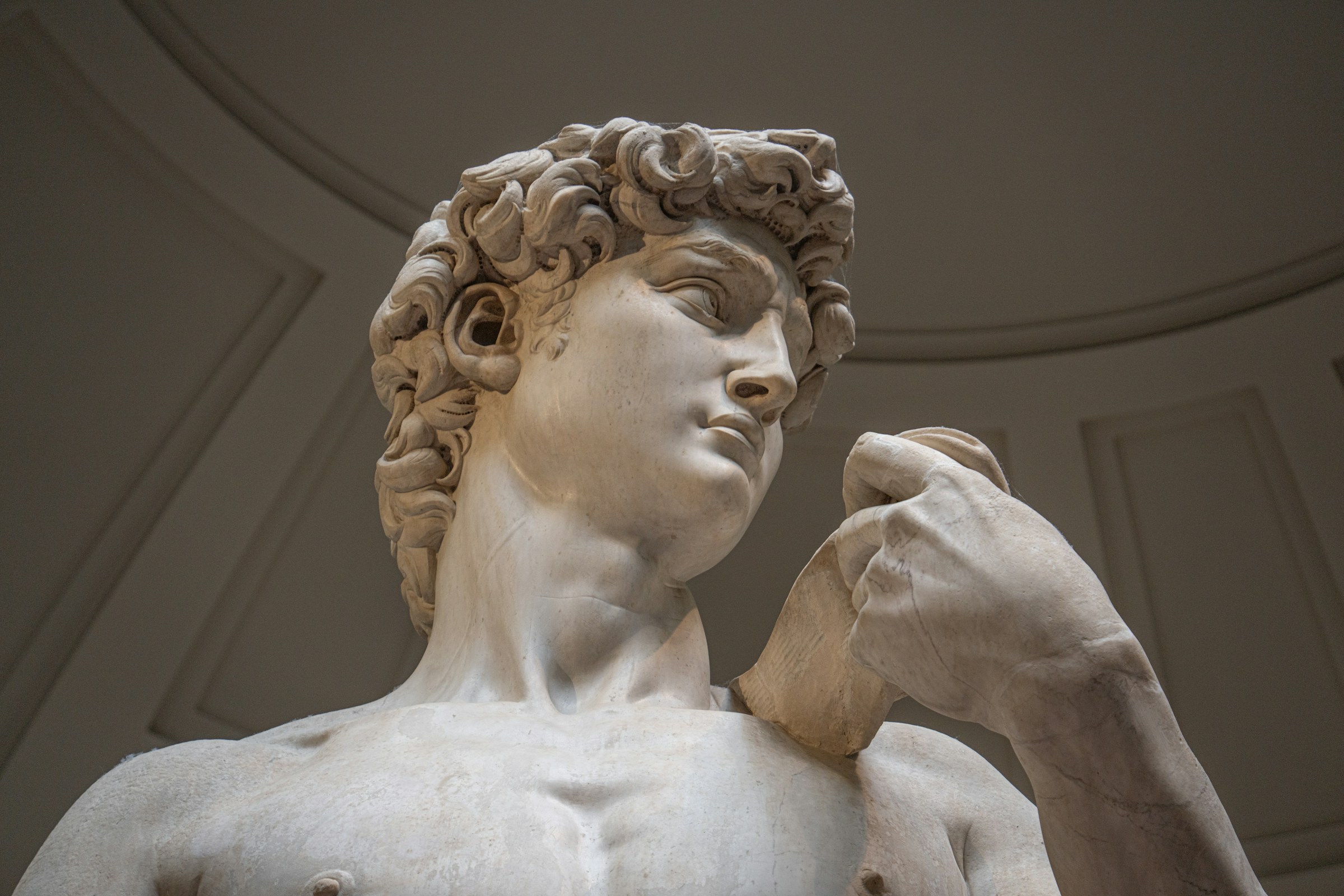
In 1501, he returned to Florence and embarked on the project that would become one of the most celebrated works of art ever created. From a single block of Carrara marble, Michelangelo carved David between 1501 and 1504. Standing more than 17 feet (5.2 meters) tall, the sculpture captures the biblical hero in the tense moments before his battle with Goliath. Every muscle, vein, and expression conveys strength, intelligence, and determination. Widely regarded as the finest sculpture ever made, David became an enduring symbol of Florence, the Renaissance, and the limitless potential of human creativity.
The triumph of David brought Michelangelo to the attention of Pope Julius II, who summoned him to Rome. Initially commissioned to design the pope’s grand tomb, Michelangelo was soon assigned an even more ambitious task: painting the ceiling of the Sistine Chapel. Between 1508 and 1512, he transformed the vast vault into one of the greatest artistic achievements in history. The frescoes depict scenes from the Book of Genesis, including the iconic Creation of Adam, whose nearly touching hands have become one of the most recognizable images in the world. Years later, Michelangelo returned to paint the dramatic Last Judgment on the chapel’s altar wall, completing a masterpiece that continues to inspire awe in millions of visitors every year.
Yet Michelangelo’s genius extended far beyond sculpture and painting. As an architect, he introduced bold and innovative ideas that reshaped Renaissance design. In Florence, his work on the Laurentian Library challenged architectural conventions with its striking forms and dynamic spaces. In Rome, his redesign of the dome of St. Peter’s Basilica created one of the most recognizable silhouettes on the planet, a crowning achievement that still dominates the city’s skyline today.
For travelers exploring Florence, no encounter with Michelangelo is more unforgettable than standing face-to-face with David. Seeing the sculpture in person reveals details and emotions that no photograph can fully capture. Join our David and the Accademia Gallery Small-group Tour to admire this colossal masterpiece up close and discover the extraordinary story of the genius who carved perfection from stone.
Book the Tour